














China News Service — April 18
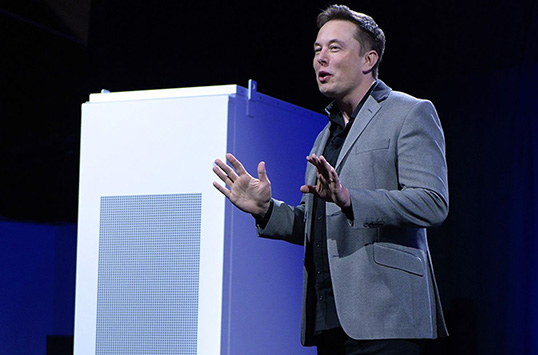
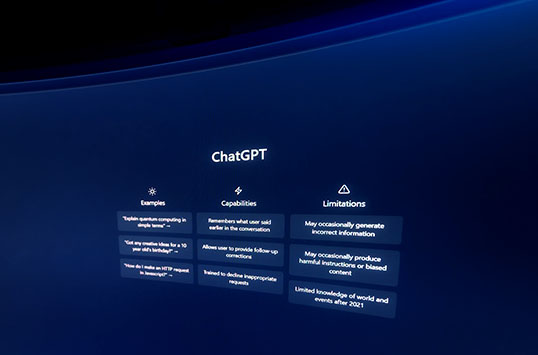
According to international media reports, billionaire tech entrepreneur Elon Musk announced on April 17 local time that he would develop a new AI chatbot called TruthGPT to challenge OpenAI’s “lying” artificial intelligence, ChatGPT—and called for the establishment of an AI regulatory agency.
“I’m going to start working on TruthGPT—a maximally truth-seeking AI that tries to understand the nature of the universe,” Musk said in a media interview. “I think this might be the best path to safety, because an AI that cares about and understands the universe is unlikely to annihilate humanity—after all, humans are part of what makes the universe interesting.”
According to sources familiar with the matter, Musk has been actively recruiting talent from Google to launch a startup aimed at competing with OpenAI.
Corporate filings in Nevada reveal that Musk registered a company named X.AI in the state in March, listing himself as its sole director.
Musk also criticized OpenAI, accusing it of “training AI to lie” and describing the organization as having become “closed-source” and “profit-driven.”
Musk co-founded OpenAI in 2015 but stepped down from its board in 2018. In a 2019 social media post, he explained that he left to focus more fully on Tesla and SpaceX, adding that he “disagreed with some of the directions the OpenAI team wanted to pursue.”
In an interview with Fox News, Musk reiterated his warnings about artificial intelligence, stating, “AI is far more dangerous than poorly managed aircraft design, production, and maintenance—or even shoddy car manufacturing.” He warned that AI could manipulate public opinion and, in extreme cases, undermine civilization itself.
“We should be cautious about AI because it’s hard to predict what will happen next,” Musk said in the interview. “AI poses risks to the public, and governments should implement some form of regulation.”
Musk emphasized that he has long advocated for “robust and wise” oversight. On social media, he recalled that during his only one-on-one meeting with former U.S. President Barack Obama, he did not pitch Tesla or SpaceX—but instead urged the need for AI regulation.
He pointed out that the U.S. already has agencies like the Department of Agriculture and the Food and Drug Administration (FDA) to safeguard food and drug safety, and the Federal Aviation Administration (FAA) to ensure aviation safety. By the same logic, he argued, a dedicated agency should be established to regulate artificial intelligence.
Musk proposed that such a regulatory body establish clear industry operating rules to better “ensure AI benefits humanity.”
Previously, Musk joined a group of AI experts and industry executives in signing an open letter calling for a six-month pause in the training of AI systems more powerful than OpenAI’s newly released GPT-4 model, citing potential risks to society and humanity.