


















Despite the impressive record created by artificial intelligence (AI), its learning capabilities are still dwarfed by those of the human brain. Now, scientists have revealed a revolutionary path: organoid intelligence, which uses labor-grown brain organoids as biological hardware.
AI has long been inspired by the human brain, and this method has proven to be very successful, allowing AI to achieve many achievements from medical diagnosis to poetry creation. But there is no doubt that the original model, the human brain, is still superior to the machine in many ways. What if we weren't trying to make AI more like the brain, but started directly at the source?
Scientists in multiple fields are working to create a new generation of biological computers, trying to use three-dimensional cultures of brain cells (brain organoids) as biological hardware and describing a roadmap to achieve this vision in the journal Frontiers of Science.
Professor Thomas Harton of Johns Hopkins University in the United States said: "We call this new interdisciplinary field 'Organoid Intelligence'(OI). A group of top scientists are gathering to develop this technology, which will usher in a new era of fast, powerful and efficient biological computing."
Why are brain organoids better computers?
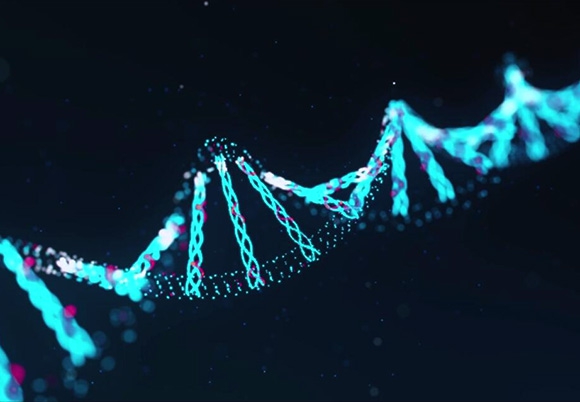
Brain organoids are cell cultures that are born in the laboratory. It is not a "mini brain", but it can "share" key aspects of brain function and structure, such as neurons and other brain cells. In addition, while most cell cultures are flat, organoids have three-dimensional structures, which doubles the cell density of the culture and means that neurons can form more connections.
But people still ask: Aren't current computers smarter and faster than the brain?
Harton explained that while silicon-based computers are definitely better at numbers, the brain is better at learning and is more energy-efficient. For example, training the famous AI "Alpha Dog" takes more energy than it takes to maintain an active adult for 10 years.
"The brain also has an amazing ability to store information." Harton added,"We are reaching the physical limits of silicon computers because humans can no longer package more transistors into a tiny chip. But the brain's connections are completely different. It has about 10 billion neurons connected through more than a thousand points. This is a huge power difference compared to current technology."
What does OI biological computer look like?
According to Harton, current brain organoids need to be expanded in size. "They are so small, each containing about 50000 cells. For OI, we need to increase that number to 100,000."
At the same time, researchers are also developing technologies to communicate with organoids. That is to send them information and read out what they are "thinking." This requires the use of bioengineering and machine learning, as well as the design of new stimulation and recording devices.
The Harton team has also developed a brain-computer interface device. In a paper published in August last year, it is a flexible shell densely covered with tiny electrodes that can both receive signals from organoids and transmit signals to it.
Scientists envision that eventually OI will integrate a wide range of stimulation and recording tools. They connect, activate, and coordinate organoid networks to enable more complex calculations.
OI can help prevent and treat nervous system diseases
OI will also transcend computing and enter the field of medicine. Thanks to breakthrough technology developed by Nobel Prize winners John Gordon and Nobu Yamanaka, brain organoids can be produced from adult tissue. This means scientists can develop personalized brain organoids from skin samples from patients with neurological diseases such as Alzheimer's disease. Multiple tests were conducted to investigate how genetic factors, drugs and toxins affect these conditions.
For example, Harton said that scientists can now compare the memory formation of organoids between healthy people and Alzheimer's patients and try to repair defects.
Establishing an "embedded ethics" approach
Creating human brain organoids that can learn, remember, and interact with the environment inevitably faces complex ethical issues. Can they develop awareness? Do they experience pain? What rights does the scientific community have over brain organoids made from cells?
Researchers are keenly aware of these issues. Harton said they wanted to develop OI in an ethical and socially responsible way, and for this reason they worked with ethicists from the beginning to establish an "embedded ethics" approach. As research evolves, all ethical issues will be continuously evaluated by a team of scientists, ethicists and the public.
How far is it to the first OI?
Although OI is still in its infancy, a recently published study by scientists has provided proof of concept. Research shows that normal, flat brain cell cultures can learn to play electronic ping pong games.
Harton concluded that the research team is already testing with brain organoids, and this experiment using organoids to replicate this has met the basic definition of OI. From now on, humans can realize the full potential of OI by simply building communities, tools and technologies. (Science and Technology Daily reporter Zhang Mengran)